
Char Dham
Journeys that take you beyond the destination.
Discover India’s most sacred places through thoughtfully curated journeys designed around spirituality, comfort, culture and connection.
Ganga Aarti, Varanasi
From sacred yatras to spiritual retreats, find a journey that speaks to your soul.
Handpicked spiritual journeys that blend faith, culture and meaningful experiences.
Showing
These journeys are planned to order. Tell us where and when, and our spiritual travel expert will build the itinerary around you.

Some journeys are measured in kilometres. Others are measured in moments of peace, faith and reflection. Spiritual Journeys by Beyond Journey bring together sacred destinations, meaningful experiences and thoughtful travel so you can focus on what truly matters.
Discover spiritual destinations across India.
No booking engine. A person plans the journey with you and puts every quote in writing before you commit to anything.
Request a callback or customise any journey above. Share who is travelling, your dates and the pace you would like.
Our spiritual journeys desk builds the itinerary around you, stays, transport and darshan assistance included, and sends a written quote. Nothing is charged while you decide.
From home pickup to drop, one team stays on the journey with you, with 24/7 support on one number until you are home.
Real stories from our spiritual journeys.

Meena & Rajesh
The entire journey was organised so well that we could focus completely on the experience. Everything from transfers to darshan was seamless.
Everything you need to know about booking, customising and enjoying your spiritual journey with Beyond Journey.
Talk to a spiritual journeys expert — we design journeys around you, 24×7.
+91 93115 11338 query@beyondjourney.inYes. Every journey is planned around the pace of the group: home pickup and drop, comfortable transportation, curated accommodation, a dedicated tour leader and senior-friendly planning are part of how we work. Tell us who is travelling and any health or mobility needs, and we plan the days around them.
Typically your stays, transport between the sacred places, a dedicated tour leader, luggage assistance, darshan assistance where applicable and 24/7 journey support. Meals and any special poojas depend on the journey. The exact inclusions for your trip are listed in the written quote, so there is nothing to guess.
Where a temple offers assisted or scheduled darshan, we arrange what can be arranged and tell you in advance what you will need to carry or register yourself. Some shrines have their own registration or slot systems and the rules change through the year, so your tour leader keeps you informed on the journey.
The four shrines open in late April or May and close around Diwali, in October or November; the exact dates are announced each year. May, June and September to early October are the most comfortable months. July and August bring the monsoon, with heavy rain and possible road closures in the hills, so we usually plan around them.
Yes. Every journey here can be rebuilt around you: add or drop a place, change the hotel category, travel on your own dates, or make it a private departure for your family or group. Use Customise your trip on any card, or tell us what you have in mind and we build it from scratch.
Request a callback or customise a journey, and our spiritual journeys desk calls you back. We plan the trip with you and send a written quote. There is no charge while you decide; you confirm only when the plan and the price are right.

Tell us where your heart wants to go. A person plans it with you and quotes in writing before you commit.
Varanasi — Kashi, the city of light — is counted among the oldest continuously inhabited cities in the world, and it wears its age openly. More than eighty ghats step down to the Ganga, and life, prayer and farewell all happen on the same stone steps.
Most pilgrimages lead to a single shrine. In Kashi the whole city is the shrine. The Kashi Vishwanath temple is one of the twelve Jyotirlingas, but people come as much for the river as for the temple: to bathe at dawn, to watch the evening aarti at Dashashwamedh Ghat, and to see how a city lives so calmly beside its cremation grounds.
Kashi rewards slowness. Stay near the river, walk the lanes, and let the city set the pace.
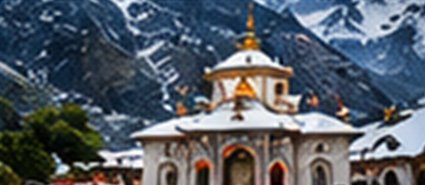
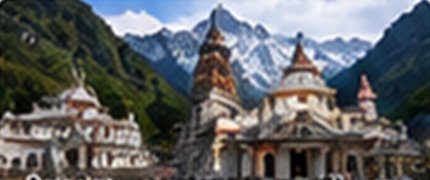
The Char Dham of Uttarakhand — Yamunotri, Gangotri, Kedarnath and Badrinath — are four Himalayan shrines visited, by tradition, from west to east. Together they make one of India’s most loved yatras, and one of its most demanding.
The temples open in late April or May and close for the winter in October or November. May, June, September and October are the usual months; the July–August monsoon brings landslides on the mountain roads, so most families avoid it.
Pack warm layers even in summer, keep a rest day in hand for the altitude, and see a doctor first if anyone in the group has a heart or breathing condition.
Krishna’s story travels across India, from the villages of Braj where he grew up to the kingdom he ruled on the western sea. Following it is one of the gentlest and most joyful journeys a family can make.
Mathura is his birthplace, and Vrindavan, a short drive away, is where the stories of his childhood are told in thousands of temples — Banke Bihari among the most beloved. Nearby Gokul, Govardhan and Barsana complete the circle; many pilgrims walk the Govardhan parikrama of about 21 km.
On the coast of Gujarat, the Dwarkadhish temple honours Krishna as king. A boat crossing to Bet Dwarka and a stop at Nageshwar, one of the Jyotirlingas, fit easily into the same visit.
The twelve Jyotirlingas are the shrines where Shiva is worshipped as a jyoti — an endless column of light. Visiting all twelve is one of the great undertakings of Hindu pilgrimage, and it crosses the whole of India.
Covering all twelve takes three to four weeks with flights and trains between regions. Kedarnath is open only from about May to October, which usually decides the season. At Ujjain, the dawn Bhasma Aarti has to be booked in advance.
Rameswaram sits on Pamban Island, off the coast of Tamil Nadu, and holds a place in two great pilgrimages at once: its Ramanathaswamy temple is one of the twelve Jyotirlingas and one of the four dhams, with Badrinath, Dwarka and Puri.
Tradition holds that Rama worshipped Shiva here on his return from Lanka. The temple is famous for its long pillared corridors, and for the wells inside it where pilgrims bathe, one after another, before darshan.